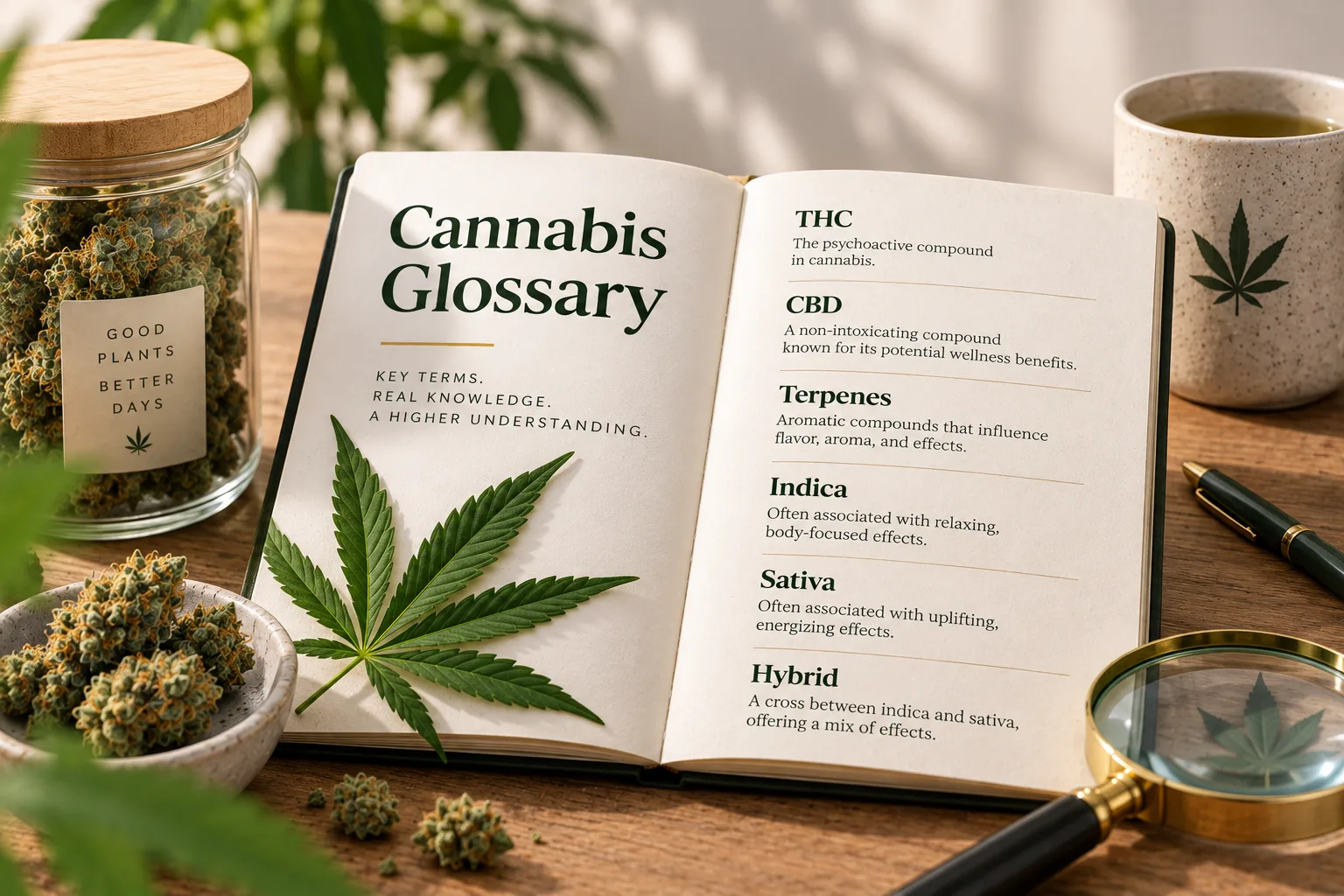
Walking into a dispensary should feel exciting, not confusing. But cannabis has its own language, and that language can get overwhelming fast. One product says live resin. Another says rosin. A flower label shows THC percentage, terpene profile, harvest date, and strain type. An edible lists milligrams per serving. A vape might be distillate, full-spectrum, disposable, or cartridge-based.
A clear cannabis glossary helps turn all of that into plain English. When you understand the basic terms, you can ask better questions, compare products more easily, and choose cannabis that actually fits your goals.
At Phenotopia, we believe cannabis should feel welcoming, personal, and easy to understand. Our Santa Rosa dispensary was built around friendly guidance, quality products, and a judgment-free shopping experience for locals, visitors, beginners, and experienced cannabis consumers alike. Whether you are browsing flower, pre-rolls, edibles, vapes, concentrates, tinctures, topicals, CBD products, or accessories, this glossary will help you make sense of the words you see on our shelves and online menu.
Understanding Key Terms in a Cannabis Glossary
A good cannabis glossary does more than define words. It gives you a practical way to shop. These terms explain the plant, the compounds inside it, the ways people consume cannabis, and the product labels that help you compare one option to another.
You do not need to memorize everything at once. Start with the terms that matter to your preferred experience. If you are new to edibles, focus on milligrams, onset, duration, and serving size. If you love flower, learn about strains, terpenes, cure, trichomes, and THC percentage. If you are curious about concentrates, terms like live resin, rosin, wax, diamonds, and solventless will help you understand what you are buying.
The goal is confidence. Once the words stop feeling like code, the cannabis menu becomes much easier to navigate.
Cannabinoids: The Active Compounds That Shape Effects
Cannabinoids are natural compounds found in the cannabis plant. They interact with the body’s endocannabinoid system and help shape the way cannabis feels. The two most familiar cannabinoids are THC and CBD, but there are many others, including CBG, CBN, CBC, THCA, and CBDA.
THC is the main intoxicating compound in cannabis. It is responsible for the classic high many people associate with flower, vapes, edibles, and concentrates. Depending on the person, dose, and product type, THC may feel euphoric, relaxing, creative, giggly, sleepy, mentally active, or physically heavy.
CBD is different because it does not create the same intoxicating high. Many customers look for CBD when they want a calmer or more balanced cannabis experience. Some products contain mostly THC, some contain mostly CBD, and others combine the two in specific ratios.
For example, a THC-dominant product may be better suited for someone looking for a stronger psychoactive effect. A CBD-rich product may be better for someone who wants something gentler. A balanced THC:CBD product may offer a middle ground. Understanding cannabinoids helps you shop with intention instead of only chasing the highest THC number.
Terpenes and Why They Matter
Terpenes are aromatic compounds found in cannabis and many other plants. They are the reason one strain smells like citrus, another smells like pine, and another smells earthy, floral, sweet, gassy, spicy, or skunky.
Terpenes also help explain why two cannabis products with the same THC percentage can feel different. A 25 percent THC flower with a citrus-forward terpene profile may not feel the same as a 25 percent THC flower with earthy, musky, or peppery notes. The THC number matters, but it is not the whole story.
Common cannabis terpenes include myrcene, limonene, pinene, caryophyllene, and linalool. Myrcene is often associated with earthy or herbal aromas. Limonene smells citrusy. Pinene smells like pine. Caryophyllene has a peppery or spicy profile. Linalool is floral and lavender-like.
When customers at Phenotopia ask why one strain feels better to them than another, terpenes are often part of the answer. Aroma is not just a bonus. It can be a clue.
Indica, Sativa, and Hybrid Explained Simply
Indica, sativa, and hybrid are some of the most common words in cannabis. They are useful, but they are not perfect.
Indica is often used to describe cannabis that feels relaxing, body-focused, or evening-friendly. Many people shop for indica when they want to unwind, slow down, or enjoy a calmer experience.
Sativa is often used to describe cannabis that feels uplifting, energizing, creative, or daytime-friendly. Many customers choose sativa when they want something social, active, or mentally bright.
Hybrid refers to cannabis bred from both indica and sativa genetics. Most modern strains are hybrids. Some lean more indica, some lean more sativa, and some feel balanced.
The important thing to know is that these categories are only a starting point. A strain’s cannabinoid profile, terpene profile, potency, freshness, and your own body chemistry all influence the final experience. That is why a budtender may ask what you want to feel, not just whether you want indica or sativa.
Consumption Methods Covered in a Practical Cannabis Glossary
Cannabis can be consumed in several ways, and each method has a different onset, duration, and feel.
Smoking flower is the classic method. It usually has a fast onset because cannabinoids enter the bloodstream through the lungs. Many customers like smoking because it is familiar, social, and easy to adjust one puff at a time.
Vaping also has a fast onset, but it uses vapor rather than smoke. Vape cartridges and disposable vapes are popular because they are portable, convenient, and often more discreet than flower.
Edibles are different because they must be digested first. They can take longer to kick in, often 30 minutes to two hours, and the effects can last longer than smoking or vaping. This is why edibles require patience. Taking more too soon is one of the most common beginner mistakes.
Tinctures are liquid cannabis products often taken with a dropper. Some people place them under the tongue, while others add them to food or drinks depending on the product directions.
Topicals are applied to the skin. These include creams, balms, lotions, salves, and oils. Most topicals are used for localized application and are not typically chosen for a traditional high.
Concentrates are potent cannabis extracts. They include products like wax, shatter, rosin, resin, badder, crumble, diamonds, and sauce. Concentrates are usually stronger than flower, so they are best approached with care, especially if you are newer to cannabis.
Edibles and Dosing Language You Will See on Labels
Edibles are cannabis-infused foods, drinks, capsules, gummies, chocolates, mints, or other ingestible products. The key word to understand with edibles is milligrams.
Milligrams measure the amount of THC, CBD, or another cannabinoid in a serving. If a gummy says it contains 10 mg THC per piece, that means one gummy contains 10 milligrams of THC. If the package contains 100 mg total and 10 pieces, each piece is likely 10 mg.
For many beginners, 10 mg can be too much. Some people prefer to start with 2.5 mg or 5 mg, especially if they have low tolerance. Edibles can feel stronger than expected because the body processes THC differently through digestion.
The best rule is simple: start low and go slow. Take a small serving, wait long enough to feel the full effect, and avoid redosing too quickly. With edibles, patience is part of the product.
Concentrates, Extracts, and Potency Terms
Concentrates are cannabis products made by separating cannabinoids and terpenes from plant material. They are called concentrates because they contain a concentrated amount of cannabis compounds.
A gram of concentrate is not the same as a gram of flower. Concentrates often test much higher in THC, which means a small amount can go a long way.
Rosin is a solventless concentrate made with heat and pressure. Many customers like rosin because it is crafted without chemical solvents.
Live rosin is made from fresh frozen cannabis and is also solventless. It is often considered a premium concentrate because it preserves flavor, aroma, and plant character.
Live resin is usually made from fresh frozen cannabis using solvent-based extraction. It is popular for its terpene-rich flavor and aromatic profile.
Distillate is a refined cannabis oil often used in vape cartridges, edibles, and infused products. It is known for potency and consistency, though it may not offer the same full plant profile as some live resin or rosin products.
Dabbing is the process of vaporizing a small amount of concentrate using a dab rig, e-rig, or compatible vaporizer. Because concentrates can be very potent, dabbing is generally better suited for experienced consumers.
Growing and Cultivation Terms That Affect Quality
Some cannabis terms describe how the plant was grown, harvested, dried, and prepared.
Indoor cannabis is grown in a controlled environment. Growers can manage light, temperature, humidity, airflow, and other factors. Indoor flower is often known for visual consistency and carefully controlled quality.
Outdoor cannabis is grown under natural sunlight. Outdoor flower can express unique terpene profiles and regional character, especially when grown by skilled farmers.
Greenhouse cannabis combines elements of indoor and outdoor cultivation. It uses natural sunlight with more environmental control than a fully outdoor grow.
Cure refers to the drying and aging process after harvest. A good cure can improve flavor, aroma, smoothness, texture, and overall quality. Poorly cured flower may smell flat, feel too dry or too wet, or smoke harshly.
Freshness matters too. Cannabis that has been properly harvested, cured, packaged, and stored usually offers a better experience than flower that has dried out or lost aroma.
The Plant
Cannabis: The plant genus that includes varieties used for adult-use, medical, wellness, and hemp products. People may also say weed, marijuana, flower, bud, herb, or ganja, but cannabis is the more precise plant term.
Flower: The harvested, dried, and cured buds of the cannabis plant. Flower can be smoked, vaporized, or used to make infusions where allowed.
Bud: Another word for cannabis flower. Bud usually refers to the dense, resinous part of the plant that contains cannabinoids, terpenes, and trichomes.
Strain: A named variety of cannabis. Strains are often bred for certain aromas, effects, cannabinoid levels, terpene profiles, or growth traits.
Cultivar: A more precise agricultural term for a cultivated plant variety. In everyday dispensary language, it is similar to strain.
Trichomes: Tiny resin glands on cannabis flower. They often look like frosty crystals and contain many of the cannabinoids and terpenes that shape potency, aroma, and flavor.
Cure: The post-harvest drying and aging process that helps flower develop its final texture, smell, smoothness, and taste.
THC, CBD, and Cannabinoids
Cannabinoids: Natural compounds found in cannabis that interact with the body’s endocannabinoid system.
THC: Short for tetrahydrocannabinol. THC is the main intoxicating cannabinoid in cannabis.
CBD: Short for cannabidiol. CBD is not intoxicating in the same way THC is and is often used by people seeking a more balanced experience.
CBG: Short for cannabigerol. CBG is a minor cannabinoid that appears in some flower, tinctures, edibles, and wellness-focused products.
CBN: Short for cannabinol. CBN is often associated with aged cannabis and nighttime products.
THCA: The acidic, non-intoxicating form of THC found in raw cannabis before heat is applied.
Decarboxylation: The heating process that converts THCA into THC. Smoking, vaping, and cooking all involve heat activation.
Cannabis Glossary Terms for Effects
High: The intoxicating experience associated with THC. It may feel euphoric, relaxing, creative, sleepy, giggly, heavy, or mentally active.
Body high: A physical-feeling cannabis experience. People may describe it as heavy, relaxing, warm, or muscle-focused.
Head high: A more mental or cerebral cannabis experience. People may describe it as creative, social, dreamy, thoughtful, or energizing.
Onset: How long it takes to feel the effects. Smoking and vaping usually have faster onset than edibles.
Duration: How long the effects last. Edibles usually last longer than inhaled cannabis.
Tolerance: How accustomed your body is to cannabis. A person with low tolerance may feel strong effects from a small amount.
Microdose: A very small amount of cannabis, often used to keep the experience subtle and manageable.
Overconsumption: Taking more cannabis than intended. This can feel uncomfortable and may include anxiety, dizziness, nausea, confusion, or an overly intense high.
Terpenes and Aroma Terms
Terpenes: Aromatic compounds that give cannabis its smell and flavor.
Myrcene: A terpene often associated with earthy, herbal, musky, or mango-like aromas.
Limonene: A citrusy terpene often found in strains with lemon, orange, or bright fruit notes.
Pinene: A terpene that smells like pine needles or fresh forest air.
Caryophyllene: A spicy, peppery terpene also found in black pepper and cloves.
Linalool: A floral terpene also found in lavender.
Entourage effect: The idea that cannabinoids, terpenes, and other plant compounds may work together to shape the overall cannabis experience.
Full-spectrum: A product that preserves a wider range of cannabinoids, terpenes, and plant compounds.
Broad-spectrum: A product that contains multiple cannabis compounds but may remove THC depending on the product.
Isolate: A purified single compound, such as CBD isolate.
Cannabis Glossary Terms for Product Types
Pre-roll: A ready-made cannabis joint. Pre-rolls are convenient because they do not require grinding flower or rolling papers.
Infused pre-roll: A pre-roll enhanced with concentrate, kief, hash, oil, or another cannabis extract. These are usually stronger than standard pre-rolls.
Vape cartridge: A small cartridge filled with cannabis oil and used with a compatible battery.
Disposable vape: A pre-filled vape device that does not require a separate battery.
Edible: A cannabis-infused food or drink. Gummies, chocolates, beverages, mints, capsules, and baked goods are common examples.
Tincture: A liquid cannabis product usually measured with a dropper.
Topical: A cannabis-infused lotion, balm, cream, oil, or salve applied to the skin.
Concentrate: A potent cannabis product made by extracting cannabinoids and terpenes from the plant.
Accessory: A non-cannabis item used to consume or store cannabis, such as rolling papers, batteries, pipes, grinders, lighters, or storage containers.
Phenotopia carries a wide selection of cannabis products, including flower, pre-rolls, edibles, vaporizers, concentrates, tinctures, topicals, CBD products, and accessories for Santa Rosa customers.
Concentrate Terms Made Simple
Extract: Another word for a concentrate. Extracts are made by separating desirable compounds from cannabis plant material.
Wax: A soft, sticky concentrate with a wax-like texture.
Shatter: A brittle, glass-like concentrate.
Badder: A soft concentrate with a whipped or batter-like texture.
Budder: A creamy concentrate with a butter-like consistency.
Crumble: A drier concentrate that breaks apart easily.
Diamonds: Crystalline cannabinoid structures often found in high-potency concentrates.
Sauce: A terpene-rich extract that may contain cannabinoids and aromatic compounds.
Rosin: A solventless concentrate made with heat and pressure.
Live resin: A concentrate commonly made from fresh frozen cannabis to preserve more of the plant’s aroma and flavor.
Live rosin: A solventless concentrate made from fresh frozen cannabis.
Distillate: A refined cannabis oil often used in vapes, edibles, and infused products.
Dab: A small amount of concentrate consumed with a dab rig, e-rig, or vaporizing device.
Rig: A device used to consume cannabis concentrates.
Cannabis Glossary Terms for Labels
THC percentage: The amount of THC in a product, usually shown as a percentage for flower and concentrates.
CBD percentage: The amount of CBD in a product.
Ratio: A comparison between cannabinoids. A 1:1 THC:CBD product contains equal parts THC and CBD.
Milligrams: A dose measurement used most often for edibles, tinctures, beverages, and capsules.
Serving size: The suggested amount to consume at one time.
Batch number: A tracking number connected to a specific production batch.
COA: Certificate of analysis. This is a lab report that may show cannabinoid levels, terpene levels, and safety testing results.
Harvest date: The date cannabis flower was harvested.
Package date: The date the product was packaged.
Expiration date: The date after which the product may no longer be at its best quality or legally sellable depending on product type and state rules.
Dosing and Safety Terms
Start low and go slow: A common cannabis phrase that means begin with a small dose and wait before taking more.
Low dose: A smaller amount of THC. For some people, this may mean 2.5 mg or 5 mg in an edible.
High dose: A larger amount of THC. What counts as high depends on tolerance, product type, and personal body chemistry.
Delayed onset: Effects that take longer to appear. Edibles are the most common example.
Impairment: Reduced ability to drive, react quickly, make decisions, or coordinate movement.
Secure storage: Keeping cannabis away from children, pets, and anyone who should not consume it.
Child-resistant packaging: Packaging designed to make cannabis products harder for children to open.
Public consumption: Using cannabis in public. Cannabis laws vary by state and city, so customers should follow California law and local rules.
California Cannabis Terms to Know
Adult-use cannabis: Cannabis available to adults 21 and older under California law.
Medical cannabis: Cannabis used by qualified medical patients under applicable state rules.
Valid ID: A current government-issued photo ID required for adult-use cannabis purchases.
Licensed dispensary: A legal cannabis retailer permitted to sell cannabis products under state and local regulations.
Purchase limit: The legal amount of cannabis a customer can buy at one time. Limits vary by product type and medical or adult-use status.
Prop 65 warning: A California consumer warning that may appear on cannabis products or dispensary websites. Phenotopia’s site includes a California Prop 65 warning for cannabis products.
Online ordering: Placing an order through a dispensary’s online menu for pickup or another available fulfillment option.
In-store pickup: Ordering ahead and picking up at the dispensary. Phenotopia’s site explains that customers can call or place an order online for priority pickup, and notes free parking and an ATM on-site.
Frequently Confused Cannabis Terms
Marijuana vs. cannabis: Cannabis is the broader plant term. Marijuana is still commonly used, especially in law and older public health language, but many brands and consumers now prefer cannabis.
Hemp vs. cannabis: Hemp is cannabis that falls below a legal THC threshold. Marijuana generally refers to cannabis above that threshold.
THC vs. CBD: THC is intoxicating. CBD does not create the same high.
Flower vs. concentrate: Flower is dried cannabis bud. Concentrate is extracted cannabis resin, oil, or cannabinoids in a more potent form.
Edible vs. tincture: Edibles are swallowed and digested. Tinctures are liquid and may be placed under the tongue or swallowed depending on directions.
Live resin vs. rosin: Live resin is usually made from fresh frozen cannabis using solvents. Rosin is solventless and made with heat and pressure.
Potency vs. quality: Potency refers to strength. Quality includes freshness, aroma, terpene profile, genetics, cure, cleanliness, texture, and the overall experience.
This is one of the most important lessons in any cannabis glossary: stronger does not always mean better. The best product is the one that fits your tolerance, setting, desired effect, and comfort level.
How to Talk to a Budtender Using This Cannabis Glossary
A budtender can help more when you describe what you want clearly. Instead of asking only for the highest THC, give context.
You might say, “I want something relaxing, but I do not want to feel too sleepy.”
You might say, “I am new to edibles and want a very low dose.”
You might say, “I like citrusy strains, but I do not want anything too intense.”
You might say, “I want a vape that feels smooth and flavorful.”
You might say, “I usually smoke flower, but I am curious about concentrates and want to start carefully.”
That kind of information helps the Phenotopia team point you toward products that better match your goals. Cannabis shopping becomes easier when you can explain the effect, flavor, format, and strength you are looking for.
Common Questions Answered Throughout This Cannabis Glossary
Many customers ask about the difference between THC and CBD. THC creates the classic cannabis high, while CBD does not produce the same intoxicating effect.
Another common question is why edibles feel different from smoking or vaping. Edibles are processed through digestion, so they usually take longer to kick in and can last longer.
Customers also ask whether indica and sativa still matter. They do, but mostly as a starting point. Cannabinoids, terpenes, dose, tolerance, and body chemistry all matter too.
Some shoppers wonder if high THC means higher quality. Not always. A lower-THC product with a great terpene profile, fresh flower, and the right effect for your needs may be a better choice than the strongest product on the shelf.
What Are the Most Important Cannabis Terms for Beginners?
The most important beginner cannabis terms are THC, CBD, flower, edible, vape, pre-roll, terpene, strain, hybrid, concentrate, tincture, topical, dose, onset, duration, and tolerance. These words show up constantly on menus, labels, and product descriptions.
Once you understand those basics, the rest of the cannabis glossary becomes much easier.
What Is the Difference Between THC and CBD?
THC is the main intoxicating cannabinoid in cannabis. CBD is not intoxicating in the same way. A THC-heavy product may feel psychoactive, while a CBD-heavy product may feel more subtle or balanced.
Some products combine THC and CBD in specific ratios. These ratios can help customers choose a product that feels more controlled, mellow, or balanced.
What Do Terpenes Do in Cannabis?
Terpenes create aroma and flavor. They may also influence how a cannabis product feels. A strain that smells like lemon, pine, pepper, lavender, berries, fuel, or fresh earth is expressing different terpene combinations.
This is why aroma matters. Your nose can often help guide you toward cannabis you may enjoy.
Are Indica and Sativa Still Useful Terms?
Yes, but they are incomplete. Indica is commonly used for relaxing products, while sativa is commonly used for uplifting products. Hybrid strains fall somewhere between the two.
The better approach is to use indica, sativa, and hybrid as a starting point, then look at cannabinoids, terpenes, potency, and your own past experience.
Why Do Edibles Feel Different From Smoking or Vaping?
Edibles are processed through digestion, so they usually take longer to take effect. They can also last longer than inhaled cannabis. That delayed onset is why customers should avoid taking more too soon.
With edibles, the most practical advice is still the best advice: start low and go slow.
What Does Full-Spectrum Mean?
Full-spectrum means a product contains a broader range of cannabis compounds, which may include cannabinoids, terpenes, and other plant components. Many customers choose full-spectrum products because they want a more complete plant profile.
What Does Potency Mean?
Potency refers to strength. In flower, potency is usually shown as a THC percentage. In edibles, tinctures, and beverages, potency is usually shown in milligrams.
Potency matters, but it is not the only thing that matters. Product type, dose, freshness, terpene profile, and tolerance all shape the experience.
A Useful Takeaway for Better Cannabis Choices
A cannabis glossary gives you more than definitions. It gives you control over the conversation. Once you understand the difference between THC and CBD, flower and concentrate, onset and duration, terpene and strain, you can describe what you want with more confidence.
The next time you compare products, look beyond the biggest number on the label. Notice the product type, dose, terpene profile, serving size, freshness, and how you want to feel. Cannabis becomes easier to navigate when the words stop feeling like code and start feeling like tools.
At Phenotopia in Santa Rosa, our team is here to make that process easier. Whether you are shopping for flower, pre-rolls, edibles, vapes, concentrates, tinctures, topicals, CBD products, or accessories, we are happy to help you understand the menu and find the right fit for your day.