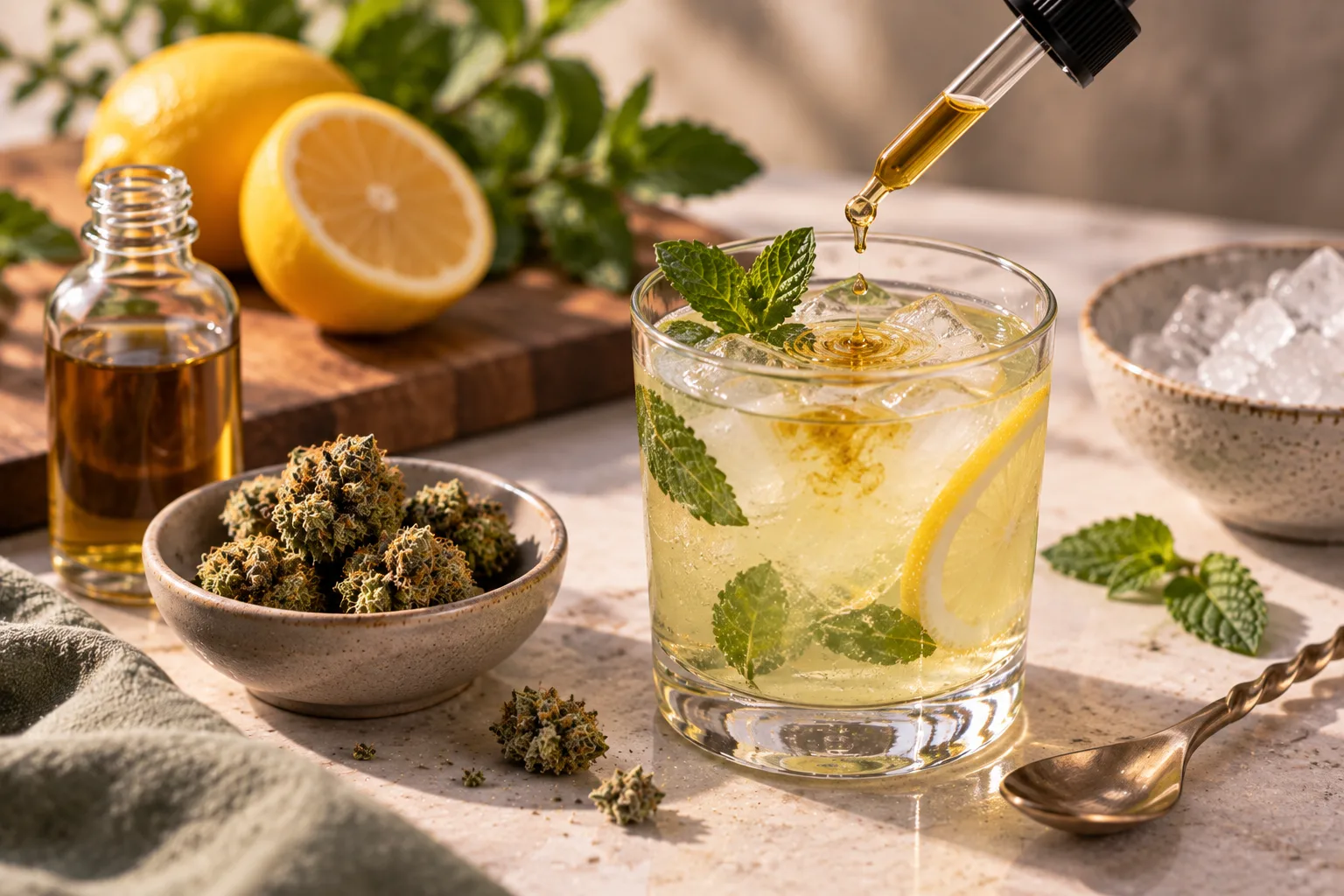
The cannabis beverage market is projected to reach 242.68 billion by 2034, and it’s not hard to understand why. Drinking your cannabis is discreet, easy to dose incrementally, and fits naturally into social situations where lighting up isn’t practical. But most people who try to make cannabis infused beverages at home run into the same wall immediately: THC is oil-soluble, and drinks are water-based. Pour a cannabis tincture into a glass of lemonade and watch it separate into a greasy film on top. That’s not a dosing problem. It’s a chemistry problem, and solving it changes everything.
This guide covers the full picture — from decarboxylation to water-soluble formats to actual recipes you can make at home — so your homemade cannabis beverages actually work the way you expect them to.
The Science Behind Cannabis Infused Beverages
Before you touch a single ingredient, understanding why cannabis and water behave the way they do will save you a lot of frustration.
THC and CBD are both hydrophobic molecules. That word means “water-fearing,” and it describes how they behave chemically: they bind readily to fats and oils but repel water.
This is why traditional cannabis infusions are almost always made with butter or oil. When you try to mix an oil-based cannabis product directly into a water-based drink, you get separation rather than integration. The cannabinoids cluster together instead of distributing evenly through the liquid, which means your dosing becomes unpredictable — one sip might have most of the THC, and the rest of the glass has almost none.
The solution is emulsification. An emulsifier is any substance that helps oil and water mix and stay mixed. Lecithin is the most common one used in cannabis cooking. It’s a naturally occurring fatty compound found in sunflowers and soybeans that acts as a bridge between oil and water molecules, holding them together in a stable blend. When you use lecithin alongside your cannabis oil or tincture, the resulting mixture distributes evenly through a liquid.
Water-soluble THC takes this further. These products undergo a process called nanoemulsification, in which the cannabinoid molecules are broken down into tiny particles (nanosized) and coated with an emulsifier during manufacturing. The resulting powder or liquid mixes cleanly into any drink without separation. Because the particles are so small, they absorb into the bloodstream faster and more efficiently than traditional oil-based edibles.
Decarboxylation: The Step You Can’t Skip
Raw cannabis flower doesn’t contain meaningful amounts of THC. It contains THCA, the acidic precursor, which has different properties and won’t produce the effects most people are looking for. Converting THCA to THC requires heat, and that process is called decarboxylation, or decarbing.
For beverages specifically, decarbing matters because you’re not applying heat during the drink-making itself, the way you would when cooking with cannabis butter on a stovetop. If you skip it, you’ll have a beautiful-looking drink with very little effect.
To decarb cannabis at home, preheat your oven to 240°F (115°C). Break your flower into small pieces and spread it in a single layer on a parchment-lined baking sheet. Bake for 40 minutes, stirring once halfway through. The flower should turn from green to a light golden brown. Let it cool completely before using it in any infusion.
If you’re using a pre-made tincture, concentrate, or water-soluble THC product from a dispensary, decarboxylation has already been done for you during processing. That’s one of the real advantages of starting with a commercial product rather than raw flower.
Making a Cannabis Tincture for Drinks
A tincture is the most versatile base for cannabis infused beverages because it’s liquid, it doses precisely, and it stores well. The simplest version uses high-proof alcohol as the solvent, which efficiently extracts the cannabinoids from the plant material.
You’ll need: decarbed cannabis (start with 3.5 grams for a small batch), food-grade high-proof alcohol like Everclear, a glass jar with a lid, cheesecloth or a fine mesh strainer, and a dropper bottle for storage.
Combine the decarbed cannabis and alcohol in the jar, using enough alcohol to fully submerge the flower. Seal the jar and shake it vigorously for about two minutes. Then let it sit for 20 minutes, shaking occasionally. Strain through cheesecloth into a clean bowl, squeezing the plant material to extract as much liquid as possible. Transfer the finished tincture to a dropper bottle.
For a batch made with 3.5 grams of cannabis at around 20% THC, you’re working with approximately 700mg of THC total across the tincture. If your finished tincture is about 60ml, each 1ml dropper contains roughly 11-12mg THC. These are estimates — home infusions don’t have the precision of lab-tested commercial products, so treat early batches as experiments and adjust based on your experience.
The alcohol-based mix mixes better into drinks than oil-based tinctures, but still benefits from emulsification. Adding a few drops of liquid sunflower lecithin to your drink after adding the tincture, then stirring vigorously, will help it distribute more evenly.
Cannabis Tea Recipe
Cannabis tea is one of the gentlest ways to consume, and one of the most approachable for people newer to cannabis infused beverages. Because hot water extracts cannabinoids more effectively than cold water, and because tea is typically consumed slowly, the experience tends to be gradual and manageable.
The simplest version: make a strong cup of your preferred tea using near-boiling water. Add a half-teaspoon of coconut oil or unsalted butter directly to the hot tea (fat is essential here — it’s the carrier for the cannabinoids). Then add your cannabis tincture, starting with 5mg THC worth of your tincture. Stir thoroughly for 30 seconds and drink while it’s hot. The fat keeps the cannabinoids somewhat bound as you drink, and your stomach processes them similarly to an edible.
For a more refined version using water-soluble THC powder, skip the fat entirely. Brew your tea, add the powder according to the product’s dosing instructions (typically one packet per serving), stir for 15 seconds, and it’s done. No oily residue, no separation, and the onset time will be faster than the fat-based method — often 15 to 30 minutes rather than 45 to 90.
Chamomile with honey and a citrus-forward water-soluble THC blend is a particularly good combination if you’re making this in the evening. The chamomile’s natural linalool content complements the terpene profile of many cannabis strains, and the honey masks any earthy aftertaste from the cannabis.
Cannabis Cocktail Recipe (and the Non-Alcoholic Version)
Combining alcohol and cannabis deserves a note upfront: the two amplify each other. Alcohol increases THC absorption, which means a cannabis cocktail will hit harder and faster than a cannabis mocktail with the same THC dose. If you’re new to mixing the two, keep the cannabis dose low (2.5 to 5mg THC) and the alcohol portion modest.
For a cannabis lemon drop mocktail: combine 2oz fresh lemon juice, 1oz simple syrup, and 3oz sparkling water in a glass over ice. Add 5mg THC worth of water-soluble THC powder or cannabis tincture. Stir well and garnish with a lemon wheel. The lemon’s brightness masks any hemp flavor, and the sparkling water makes it feel like an actual cocktail rather than a functional beverage.
For a cannabis gin and tonic (alcohol version): build a standard G&T with 1.5oz gin, tonic water, and ice. Add 2.5 to 5mg THC using a water-soluble THC product and stir. The bitterness of the tonic and the botanical complexity of the gin work well with cannabis terpenes, particularly if you’re using a strain-specific product with piney or citrusy notes.
How to Infuse Water with Cannabis
Plain cannabis infused water is possible, but it requires water-soluble THC — full stop. You cannot dissolve a traditional oil-based product into plain water without it separating and floating. With a nanoemulsified water-soluble product, you add the specified dose to cold or room-temperature water, stir for 10 to 15 seconds, and it integrates completely. No color change, no oiliness, no separation as it sits.
This format appeals particularly to people who are avoiding sugar, calories, or alcohol. A bottle of plain cannabis water is essentially calorie-free and genuinely discreet. It looks identical to regular water.
The onset for cannabis infused water made with water-soluble THC is notably faster than traditional edibles, often 15 to 45 minutes, because the nano-sized particles don’t need to be broken down by the digestive system the same way a fat-based edible does. They are absorbed more directly through the mucous membranes and the stomach lining.
Are Cannabis Beverages as Strong as Edibles?
This question comes up constantly, and the answer is: it depends on the format. A cannabis beverage made with a water-soluble THC product will typically produce a stronger, faster effect than the equivalent milligram amount in a traditional fat-based edible, because bioavailability is higher. Your body absorbs more of the THC from a nanoemulsified product than it does from, say, a cannabis gummy.
That higher bioavailability is a feature, not a bug, but it means you should start with a lower dose in beverage form than you might use with traditional edibles. If you’re comfortable with a 10mg THC gummy, start with 5mg in a cannabis beverage and assess before having more.
The other variable is how slowly you drink it. Unlike eating a single edible, drinking a cannabis beverage tends to happen over 20 to 30 minutes. That means you’re consuming the dose gradually rather than all at once, which gives you more natural checkpoints to assess where you are before finishing the drink.
The Best Cannabis Products to Use for Drinks
Water-soluble THC products are the cleanest and most consistent option for cannabis infused beverages. They mix evenly, dose predictably, and don’t require any additional fat or emulsifier to function. Most come as dissolvable powders or liquid drops, and they typically specify the THC content per serving clearly on the package.
Alcohol-based tinctures are the second-best option. They’re more accessible since they’ve been around longer, and they mix reasonably well with drinks that can accommodate a small amount of alcohol. A few drops of liquid lecithin help with distribution.
Oil-based tinctures work for fat-heavy drinks like a cannabis golden milk (warm milk with turmeric and spices) or a cannabis smoothie with nut butter, where the fat is built into the recipe. For anything water-based, they’re not the right tool.
Concentrates and raw flower are more involved and require either a full infusion process or a significant emulsification step. If you’re going the flower route, the cannabis tea method above is the most practical application. For everything else, starting with a ready-made water-soluble or tincture product from a dispensary saves considerable time and gives you a more consistent result.
The difference between a cannabis beverage that works and one that doesn’t usually comes down to picking the right format for the drink you’re making. Get that part right, and everything else is just recipe.
The team at Phenotopia can walk you through selecting the right cannabis product for your project, as well as providing guidance on dosing and infusion methods. Whether you’re looking to create a refreshing summer mocktail or a potent winter warmer, we have the expertise and products to make it happen!